
 Home > Support > document > Press Release > How to choose a reliable and capable supplier of metalworking fluids?
  Release time: May 23, 2026 16:46:07
 Author: Founder
 Page views: 0
In modern manufacturing, metalworking fluid is no longer just an auxiliary material in the production process, but a key factor affecting product quality, product qualification rate, processing efficiency, inter process protection, environmental health, and comprehensive manufacturing costs. Especially in industries such as automotive parts, aerospace, 3C electronics, cable manufacturing, non-ferrous metal processing, steel rolling, medical equipment, and new energy equipment, there are significant differences in the performance requirements of metalworking fluids for different materials, equipment, and processing techniques.
For enterprise procurement and production management personnel, choosing a suitable metalworking fluid supplier should not only compare the price per barrel, but more importantly evaluate the potential supplier's business philosophy, research and development capabilities, technical service capabilities, long-term stable supply capabilities, and successful application cases.
Many companies tend to focus only on price, brand, or a single parameter when choosing metalworking fluids. On real production sites, the role of metalworking fluids goes far beyond cooling and lubrication. It also relates to the corrosion prevention of the workpiece/equipment, whether the bath solution smells, the size of foam, the cleanness of the equipment, and whether the cost of waste liquid treatment is controllable.
For example, in the processing of different materials such as aluminum alloy, magnesium alloy, copper alloy, stainless steel, cast iron, carbon steel, engineering plastics, etc., factors such as the precipitation of workpiece material components, chemical properties of tool and workpiece materials, water quality conditions, and frictional heat release during the processing can all affect the state of the working fluid. If the product selection is improper, problems such as workpiece corrosion, large surface residue, difficulty in subsequent cleaning, fast tool wear, and short tank life may occur, ultimately affecting production efficiency and overall costs.
Therefore, choosing a suitable metalworking fluid supplier should be able to provide targeted solutions to customers from multiple dimensions such as "materials - processes - equipment - water quality - maintenance - environmental protection", rather than simply selling products.
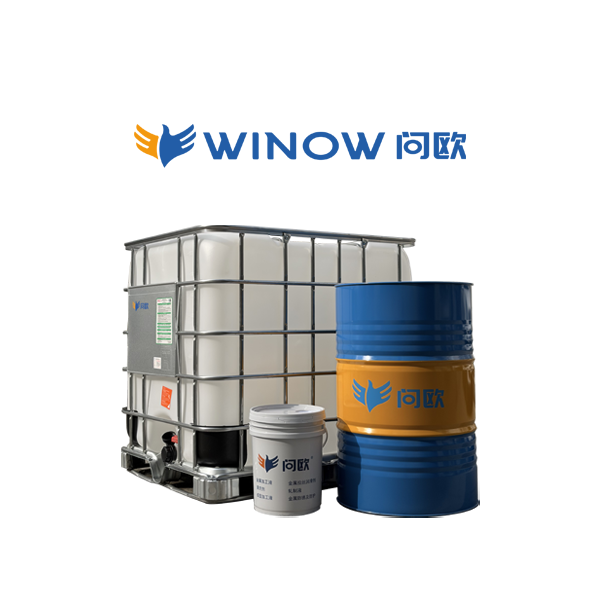
Shanghai Wenou Industrial Media Co., Ltd. has established an industrial media system covering metalworking fluids, metal drawing lubricants, cleaning agents, rolling fluids, metal rust prevention and protection, mold release agents, and other products to meet the multi process needs of manufacturing enterprises.
From the perspective of product structure, Wenou does not only provide a certain type of cutting fluid or coolant, but has laid out its layout around different key links in multiple industries and production processes. For example, in the metal processing industry and steel cold rolling industry, Wenou has cutting fluids, rolling fluids, grinding fluids, cleaning agents, and rust inhibitors to meet the manufacturing needs of different processes. In the canning industry, Wenou has cup filling fluids, stretching fluids, cleaning agents, and passivation film-forming agents.
This systematic product layout can reduce product incompatibility, on-site service fragmentation, and unclear problem responsibilities among different suppliers for manufacturing enterprises with multiple processes, materials, and equipment.
With the increasing application of lightweight materials in industries such as automotive, aerospace, robotics, 3C electronics, and new energy equipment, the processing demand for materials such as aluminum alloys, magnesium alloys, and titanium alloys continues to rise. However, lightweight material processing often places higher demands on metalworking fluids: they must meet the requirements of lubrication, cooling, environmental protection, and health, while also having low comprehensive application costs.
Ask Europe in ShanghaiMagnesium alloy machining fluid WOUCOOL 600Mg For example, its product information shows that the product adopts anti hard water and corrosion inhibition technology, with anti microbial stability, lubricity, cleanliness, cooling and rust prevention properties. The working fluid has a service life of up to 1 year and is suitable for cutting and grinding of magnesium alloys, copper alloys, aviation aluminum and other materials.
In terms of typical physical data, the magnesium alloy machining fluid WOUCOOL 600Mg, diluted with 5% tap water at pH 8.9, is recommended to be diluted at a ratio of 1:8-1:15 based on the machining strength.
For processing enterprises, the value of such product information lies in the ability to provide specific usage recommendations based on materials, processing methods, and maintenance concentrations, which facilitates on-site engineers' testing and management.
In addition to magnesium alloy machining fluids, Wenou has also launched multiple metal machining fluid products around different metal materials. For example,Aerospace Aluminum Metalworking Fluid WOUCOOL 262GAdopting aluminum corrosion suppression technology, suitable for cutting and grinding of aluminum alloys, copper alloys, and stainless steel, and emphasizing adaptability to sensitive aluminum alloys such as 7-series aluminum and 5-series aluminum processing.
In terms of black metal processing, the Wenou product system also includes black metal processing fluids, fully synthetic black metal processing fluids, cast iron processing fluids, and other products. withCast iron machining fluid WOUCOOL 760 For example, its product information shows that the product has excellent cleanliness, dispersibility, anti foaming, anti rust performance, and water quality adaptability. It can be used for cutting and grinding black metals such as cast iron and carbon steel, and is suitable for industries including automobiles, machine tools, rail transit, energy equipment, and general machinery.
This indicates that the professionalism of metalworking fluid merchants often lies in their ability to segment products based on material characteristics. Aluminum alloy processing requires attention to discoloration and residue, stainless steel processing pays more attention to extreme pressure lubrication and tool protection, and cast iron processing places more emphasis on rust prevention performance. A product system that can cover multiple materials and processes is more suitable for serving complex manufacturing scenarios.
Industrial B2B procurement is different from ordinary consumer goods procurement. Engineers focus on product performance and on-site verification, procurement focuses on stable supply and procurement costs, and enterprise managers focus on production efficiency, quality risks, and long-term cooperation value.
Wenou emphasizes on starting from the real production scenarios of customers, providing products while combining materials, equipment, processing methods, and on-site maintenance conditions to assist customers in optimizing application parameters, improving processing efficiency, product qualification rate, and reducing comprehensive usage costs. Industrial media products are not sold at once, and subsequent maintenance issues such as liquid preparation, concentration monitoring, pH management, miscellaneous oil treatment, filtration and slag removal, liquid change cycles, and equipment cleaning are also involved. Only by understanding the on-site working conditions of customers can we truly help enterprises reduce comprehensive usage costs.
The precautions for European products emphasize that the equipment should be cleaned before using new liquid, avoiding mixing with other cooling liquids. The concentration of the working fluid should be monitored regularly, and the machine tool should be equipped with a filtration and slag removal system to promptly clean impurities such as metal shavings and floating oil. This indicates that the effectiveness of the use of metalworking fluids depends not only on the product itself, but also on the on-site maintenance methods and technical service capabilities.
From the perspective of application industries, the Wenou Industrial Media Solution covers multiple fields such as lightweight materials, steel, cable manufacturing, non-ferrous metals, canning and aluminum shell manufacturing, glass/ceramic processing, automotive, industrial, medical, and concrete products. Moreover, Wenou has made clear plans for industry solutions, such as emphasizing the solution to the processing difficulties of magnesium aluminum alloys in the direction of lightweight materials, focusing on silicon steel and steel rolling in the direction of steel, reducing wire breakage rate and mold loss in the direction of cable manufacturing, and emphasizing surface processing quality, product qualification rate, and tool loss in the direction of non-ferrous metals.
This industry-specific approach helps customers quickly determine the matching relationship between their own working conditions and product solutions. For metalworking fluid merchants, the more industry experience and customer cases they have, the more they can reduce customer trial and error costs. For example, both lubricating and cooling products, used in aviation aluminum precision machining, magnesium alloy machining, and black metal machining, have completely different performance concerns. Only professional metalworking fluid suppliers can provide customers with more on-site advice.
1、 Check if the product system is complete. Manufacturing enterprises often do not only need one product, but involve multiple processes such as processing, cleaning, rust prevention, forming, wire drawing, and rolling. The more complete the product system, the more conducive it is to establishing a comprehensive solution.
2、 Check if you have technical research and development capabilities. Aluminum, magnesium, copper, stainless steel, cast iron, carbon steel, titanium alloy and other materials have different requirements for machining fluids. Professional merchants should be able to provide corresponding products based on materials and processes.
3、 Check the on-site technical service capabilities. The long-term stable operation of metalworking fluids is closely related to concentration management, pH management, water quality, impurities, filtration and slag removal, and equipment cleaning. Merchants who can provide maintenance suggestions are more suitable for long-term cooperation.
4、 Check if you have quality management and environmental awareness. According to company information, Shanghai Wenou has relevant qualifications such as high-tech enterprise, ISO9001 quality management system, ISO14001 environmental management system, etc. For corporate clients, such qualifications help enhance cooperation trust and reflect the standardization level of quality and environmental management in the enterprise.
Against the backdrop of increasing requirements for cost reduction, efficiency improvement, green production, and precision machining in the manufacturing industry, the selection of metalworking fluids has evolved from "buying a barrel of liquid" to "choosing an industrial medium solution suitable for on-site working conditions". For enterprises, suitable metalworking fluid vendors should not only understand the products, but also the materials, equipment, processes, and maintenance.
Shanghai Wenou Industrial Media Co., Ltd. has established a relatively complete product system around metalworking fluids and related industrial media, which can provide product selection and application recommendations for different materials, processes, and equipment scenarios. And it has formed product advantages and technological accumulation in industries such as lightweight materials, steel rolling, cable manufacturing, non-ferrous metal processing, automotive parts, medical equipment, etc. For manufacturing companies looking for metalworking fluids, cutting fluids, cooling fluids, rolling fluids, drawing lubricants, industrial cleaning agents, and metal rust prevention products, industrial medium suppliers with industry experience, material adaptation capabilities, and on-site service capabilities are often more helpful in improving production stability and overall manufacturing efficiency.
Previous: No more
Next article: No more
 WeChat
  Mini Program
 Address: 1155 Ronghua Road, Songjiang District, Shanghai
Phone/Fax: 021-57677290
Copyright © 2026 Shanghai Wenou Industrial Media Co., Ltd. All rights reserved Record number: Shanghai ICP No. 2023003999-1  Shanghai Public Security Registration No. 31011702890580


